
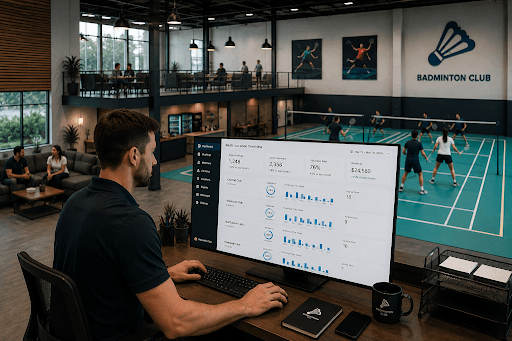
How to Manage Multiple Sports Facility Locations Without Losing Control
Growing from one sports facility to many? Learn how successful sports facilities manage bookings and daily operations across multiple locations smoothly.
Running one sports facility comes with plenty of moving parts.
Running two or three is a completely different challenge.
What works well at a single location often becomes harder to manage as your business grows. Bookings happen across different venues, staff work at multiple sites, memberships need to be recognized everywhere, and every location has its own daily schedule.
Growth is exciting, but it also brings new operational challenges.
The key isn't simply adding more courts or opening another location. It's making sure every facility delivers the same smooth experience, no matter where your members choose to play.
Let's explore a few ideas that can help you stay organized as your facilities continue to grow.
Keep Everything Connected
One of the biggest mistakes multi-location facilities make is allowing each venue to operate independently.
One location uses spreadsheets.
Another relies on WhatsApp.
A third keeps bookings in a different calendar.
Before long, it's difficult to answer even simple questions.
- Which courts are available today?
- Which location is busiest?
- How many bookings came in this week?
- Where is the staff needed most?
Keeping bookings, memberships, and schedules connected across every location makes daily operations much easier to manage.
Give Players the Same Experience Everywhere
Members don't think in terms of separate locations.
They think about your club.
Whether they book a court at your downtown facility or your newest venue across town, they expect the experience to feel familiar.
That includes:
- The same booking process
- Similar membership benefits
- Consistent communication
- Clear cancellation policies
- Easy access to their booking history

Don't Let Information Live in Different Places
As facilities grow, information often becomes scattered.
One manager has attendance records.
Another keeps payment information.
Court schedules are stored somewhere else.
When information lives in multiple places, staff spend more time searching than serving players.
Finding information shouldn't take longer than using it. Yet IBM reports that employees spend around 1.8 hours a day searching for the information they need. When bookings and member data are spread across different systems and locations, that lost time quickly adds up.
The easier it is to access information, the easier it becomes to manage multiple locations.
Standardize Everyday Processes
Growth shouldn't mean every facility develops its own way of doing things.
Simple, consistent processes help everyone stay on the same page.
For example:
- How are cancellations handled?
- When are courts released after a no-show?
- How are memberships verified?
- Who approves special bookings?
- How are maintenance issues reported?
Standardizing these everyday tasks makes training easier and reduces confusion across locations.
Use Booking Data to Balance Demand
Not every facility experiences the same level of demand.
One location may have waiting lists every evening.
Another may still have courts available during the same time.
Looking at booking data across all locations helps identify opportunities to balance demand.
You may decide to:
- Promote quieter locations.
- Adjust pricing.
- Add coaching sessions.
- Move tournaments.
- Expand operating hours where demand is highest.
Better decisions begin with better visibility.
Make Communication Easier for Staff
Managing multiple facilities means multiple teams.
Without clear communication, small problems quickly become larger ones. Good communication reduces duplicate work and creates a more consistent experience for members.
Staff should always know:
- Court availability
- Schedule changes
- Maintenance updates
- Special events
- Booking issues
Think Like One Business, Not Several Facilities
As new locations open, it's easy to focus on each venue individually.
The most successful operators think differently.
They manage multiple facilities as one connected business.
Research also shows that organizations using connected digital tools are better positioned to improve operational efficiency and make faster decisions across different teams and locations. While every business is different, having a clear view of operations becomes increasingly valuable as organizations grow.
The more connected your facilities are, the easier they become to manage.

Growth Shouldn't Create More Complexity
Opening another location should create new opportunities, not new headaches.
If managing bookings, memberships, staff schedules, and court availability across multiple sites is becoming increasingly difficult, it may be time to simplify the way your facilities operate.
Many growing sports organizations choose a centralized muti-space management system to manage bookings, memberships, payments, and reporting across every location from one place. These solutions are designed to support facilities as they expand while helping teams stay organized and deliver a consistent experience across every venue.
One Last Thing
Opening a second or third location is a sign that your facility is growing in the right direction. Keeping those locations connected is what helps that growth stay manageable.
When bookings, memberships, schedules, and daily operations are easy to keep track of, your team can spend less time chasing information and more time supporting players.
A sports facility management system gives growing facilities a more organized way to manage everything without making day-to-day operations more complicated.